Welcome to the electrifying world of Cloud Strife—where myth, identity, and destiny collide in a storm of swords, secrets, and digital skies. More than just a video game character, Cloud has become a cultural icon, a symbol of inner turmoil and heroic resilience.
Who Is Cloud Strife? The Origins of a Legend

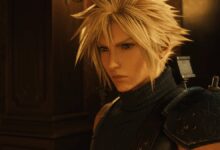
Cloud Strife is not merely a protagonist in a video game; he is a phenomenon. First introduced in 1997 in Final Fantasy VII by Square (now Square Enix), Cloud quickly became one of the most iconic characters in gaming history. His spiky blond hair, oversized Buster Sword, and brooding demeanor captured the imagination of millions worldwide.
The Birth of a Hero in Final Fantasy VII
Cloud’s debut in Final Fantasy VII marked a turning point in narrative-driven video games. Unlike earlier RPG protagonists who were often blank slates, Cloud was complex, layered, and deeply flawed. The game’s story, set in a dystopian world where a megacorporation, Shinra, drains the planet’s life force (Mako energy), positions Cloud as a mercenary with a mysterious past.
- He initially claims to be a former member of SOLDIER, an elite military unit.
- His recruitment by eco-terrorist group AVALANCHE sets the stage for the central conflict.
- The narrative slowly reveals that much of Cloud’s identity is constructed from trauma and manipulation.
As the story unfolds, players learn that Cloud’s memories are not his own, but a fusion of his own experiences and those of his friend Zack Fair, a real SOLDIER. This revelation redefined how video games could explore identity and mental health.
Evolution Across the Final Fantasy Universe
Since his debut, Cloud Strife has appeared in numerous titles, expanding his lore and influence. From Final Fantasy VII: Advent Children to Dissidia Final Fantasy, Cloud has become a recurring figure, not just in his own universe but across the broader Final Fantasy multiverse.
- Final Fantasy VII: Crisis Core explores Zack Fair’s story, providing crucial backstory to Cloud’s origins.
- Kingdom Hearts series features Cloud as a guest character, showcasing his crossover appeal.
- The Final Fantasy VII Remake trilogy (2020–present) reimagines his journey with modern graphics and deeper psychological exploration.
Each appearance adds depth to Cloud’s character, reinforcing the theme of cloud strife—not just as a name, but as a metaphor for internal conflict.
Cloud Strife’s Personality: A Deep Dive into His Psyche
What makes Cloud Strife so compelling is not his combat prowess, but his psychological complexity. He is a man grappling with identity, trauma, and the weight of perceived failure. His journey is less about defeating a villain and more about reclaiming his true self.
The Impact of Mako Poisoning and Jenova Cells
Cloud’s physical and mental state is heavily influenced by exposure to Mako energy and the alien cells of Jenova. Mako, the lifeblood of the planet, is toxic in high doses, leading to what is known as Mako poisoning. Symptoms include enhanced strength but also mental instability, hallucinations, and memory fragmentation.
- Cloud’s time in Shinra’s experiments left him physically altered and mentally scarred.
- Jenova cells, derived from an extraterrestrial entity, allow for unnatural regeneration and powers but also enable mind control by Sephiroth.
- This biological manipulation blurs the line between human and monster, a core theme in the cloud strife narrative.
“I’m not who I say I am… I’m not even sure who I am anymore.” — Cloud Strife, Final Fantasy VII
This quote encapsulates the existential crisis at the heart of Cloud’s character. His struggle is not just against Sephiroth, but against the false self he has constructed to cope with trauma.
Identity Crisis and Dissociative Amnesia
Cloud suffers from dissociative amnesia, a condition where traumatic events cause memory loss and identity fragmentation. In his case, the trauma stems from his failure to save Zack Fair and his own near-death experience.
- He adopts Zack’s memories and persona, believing himself to be a successful SOLDIER.
- This delusion is shattered during the game’s climax, forcing Cloud to confront his true past.
- His recovery is gradual, symbolizing the long road to healing from psychological wounds.
The portrayal of mental illness in Cloud’s arc was groundbreaking for its time. It opened discussions about how video games can handle sensitive topics with nuance and empathy. For more on the psychological aspects of gaming characters, see Psychology Today’s analysis of video game heroes.
The Buster Sword: Symbolism and Legacy
No discussion of Cloud Strife is complete without mentioning his weapon: the Buster Sword. More than a tool of combat, it is a symbol of legacy, responsibility, and emotional burden.
Origins of the Buster Sword
The Buster Sword was originally wielded by Zack Fair, Cloud’s mentor and friend. After Zack’s death, Cloud inherits the sword, both literally and symbolically.
- It represents the weight of Zack’s legacy and the expectations Cloud feels he must live up to.
- The sword’s massive size reflects Cloud’s internal struggle—carrying something too big for one person.
- In Final Fantasy VII Remake, the sword is shown to be a family heirloom of the Hewley family, deepening its emotional significance.
The weapon becomes a physical manifestation of Cloud’s cloud strife—a constant reminder of loss, guilt, and the need for redemption.
Evolution of the Weapon in Later Games
Over time, the Buster Sword evolves, both in design and meaning. In Advent Children, Cloud wields a modified version with interchangeable blades, symbolizing his growth and adaptability.
- In Dissidia, the sword takes on a more stylized, exaggerated form, reflecting Cloud’s status as a legendary warrior.
- The Remake series introduces multiple weapon variants, allowing players to customize Cloud’s combat style.
- Each evolution mirrors Cloud’s psychological journey—from denial to acceptance.
The sword is not just a weapon; it is a narrative device that tracks Cloud’s transformation from a broken mercenary to a true hero.
Cloud Strife vs. Sephiroth: The Ultimate Rivalry
The conflict between Cloud Strife and Sephiroth is one of the most iconic rivalries in gaming history. It transcends mere physical combat, representing a battle between light and darkness, control and freedom, and self versus illusion.
The Genesis of Their Conflict
Sephiroth, once the greatest SOLDIER, discovers his origins as a genetic experiment created from Jenova cells. This revelation drives him to madness, believing himself a divine being destined to rule the planet.
- Cloud, as a product of similar experiments, is both a mirror and an obstacle to Sephiroth.
- Their first major confrontation occurs in Nibelheim, where Sephiroth burns the village and kills Cloud’s mother.
- This event becomes a psychological anchor for Cloud, replayed in nightmares and flashbacks.
Their rivalry is not just personal; it is cosmic. Sephiroth seeks to merge with the planet and become a god, while Cloud fights to protect life and free will.
Psychological Warfare and Mind Control
What sets this rivalry apart is the psychological dimension. Sephiroth doesn’t just fight Cloud—he invades his mind.
- Using Jenova’s cells, Sephiroth manipulates Cloud’s thoughts, turning him into a puppet in the original game.
- In Advent Children, Sephiroth returns as a manifestation of Cloud’s inner darkness.
- Their battles are as much internal as they are external, symbolizing Cloud’s fight against self-doubt and despair.
“You’re weak because you don’t have a past. I’ll give you one.” — Sephiroth, manipulating Cloud
This line underscores the core of their conflict: identity. Sephiroth tries to define Cloud, while Cloud must define himself.
Cloud Strife in Popular Culture and Media
Cloud Strife has transcended video games to become a global pop culture icon. His image appears in merchandise, music, and even academic discourse.
Crossovers and Guest Appearances
Cloud has made appearances in numerous non-Final Fantasy titles, cementing his status as a crossover legend.
- He is a playable character in the Super Smash Bros. Ultimate DLC, representing the Final Fantasy series.
- In Kingdom Hearts, he appears as a brooding warrior in Hollow Bastion, aiding Sora in his quest.
- He has also appeared in Fortnite as a purchasable skin, showing his mainstream appeal.
These appearances introduce Cloud to new audiences, reinforcing the enduring relevance of cloud strife as a narrative archetype.
Merchandising and Fan Art Explosion
The demand for Cloud Strife merchandise is immense. From action figures to replica swords, fans celebrate his legacy in tangible ways.
- NECA and Square Enix have released high-end collectibles of Cloud in various outfits.
- Fan art of Cloud is ubiquitous on platforms like DeviantArt, ArtStation, and Instagram.
- Conventions like Comic-Con often feature Cloud cosplay, with fans recreating his iconic look with meticulous detail.
His visual design—spiky hair, black sleeveless top, and SOLDIER coat—has become instantly recognizable, rivaling characters like Mario or Master Chief in cultural footprint.
The Final Fantasy VII Remake: Reimagining Cloud Strife
The 2020 release of Final Fantasy VII Remake marked a monumental moment for fans. It wasn’t just a graphical upgrade—it was a reimagining of Cloud’s story with expanded narrative depth.
Expanded Narrative and Character Development
The Remake delves deeper into Cloud’s psyche, giving players more insight into his internal struggles.
- New dialogue and cutscenes reveal more about his time in Shinra’s labs.
- The game explores his relationship with Tifa and Aerith with greater emotional nuance.
- Cloud’s moments of vulnerability are more pronounced, making him more relatable.
The developers at Square Enix used modern storytelling techniques to enhance the original’s themes, making cloud strife more visceral than ever.
Gameplay Mechanics and Combat Evolution
The Remake shifts from the original’s turn-based system to a hybrid real-time combat system, reflecting Cloud’s dynamic personality.
- Players can switch between action-oriented attacks and strategic ATB commands.
- Cloud’s Limit Breaks, like Omnislash, are cinematic and powerful, rewarding skill and timing.
- The weapon upgrade system allows players to customize Cloud’s abilities, symbolizing his growth.
For a detailed breakdown of the combat system, check out Polygon’s comprehensive guide.
Cloud Strife’s Legacy: Why He Still Matters
Decades after his debut, Cloud Strife remains relevant. His story resonates because it speaks to universal human experiences: loss, identity, and the search for meaning.
Influence on Future Game Characters
Cloud paved the way for complex protagonists in video games. Characters like Kratos (God of War), Joel (The Last of Us), and Arthur Morgan (Red Dead Redemption 2) owe a debt to Cloud’s psychological depth.
- He proved that gamers connect with flawed, emotionally rich characters.
- His narrative structure influenced how games handle memory, trauma, and unreliable narrators.
- Developers now prioritize character arcs as much as gameplay mechanics.
Cloud’s legacy is not just in sales or spin-offs, but in how he changed the storytelling standards of the medium.
The Cultural Impact of Cloud Strife
Beyond gaming, Cloud has entered the cultural lexicon. He is referenced in TV shows, music, and academic papers on digital identity.
- He has been the subject of psychological analyses in journals like Game Studies.
- His image is used in discussions about masculinity, mental health, and heroism.
- Even non-gamers recognize his silhouette, a testament to his iconic status.
Cloud Strife is no longer just a character—he is a symbol of the cloud strife we all face in our lives: the battle within.
Cloud Strife in Fan Theories and Alternate Interpretations
The ambiguity in Cloud’s story has fueled countless fan theories, debates, and reinterpretations. The line between reality and illusion in his mind is deliberately blurred, inviting speculation.
The Simulation Theory: Is Midgar a Digital World?
One popular theory suggests that Midgar and the entire world of Final Fantasy VII might be a simulation or digital construct.
- Evidence includes the digital aesthetic of the Mako reactors and the Matrix-like pods in Shinra’s labs.
- Cloud’s fragmented memories could be glitches in the system.
- The Whispers (or Arbiters of Fate) in the Remake act as system administrators, correcting timeline deviations.
If true, this would position cloud strife as a metaphor for awakening in a controlled reality—a theme echoed in films like The Matrix.
Cloud as a Representation of Depression
Many fans interpret Cloud’s journey as an allegory for clinical depression.
- His social withdrawal, emotional numbness, and self-loathing mirror symptoms of the condition.
- His recovery is not linear; he relapses, especially in Advent Children.
- The support of friends like Tifa and Barret represents the importance of community in healing.
This interpretation has resonated deeply with players who see their own struggles reflected in Cloud’s arc.
What is Cloud Strife’s real name?
Cloud Strife’s real name is simply Cloud Strife. While his identity is fragmented and constructed, his birth name remains unchanged. The confusion arises from his adoption of Zack Fair’s memories, but his name is not an alias.
Is Cloud Strife a real SOLDIER?
No, Cloud was never a true member of SOLDIER. He was a Shinra infantryman who underwent experiments with Mako and Jenova cells. His belief that he was a SOLDIER was a delusion formed from Zack Fair’s memories and his own desire for significance.
How does Cloud Strife defeat Sephiroth?
Cloud defeats Sephiroth by overcoming his own psychological dependence on him. In the original game, after being freed from Sephiroth’s control, Cloud joins his allies to fight the final battle. In Advent Children, the victory is symbolic—Cloud confronts his inner darkness and chooses to live. It’s a triumph of self-acceptance over self-destruction.
What is the significance of the number 7 in Cloud Strife’s story?
The number 7 appears throughout the narrative: Final Fantasy VII, Sector 7, the 7th Heaven bar, and Cloud’s ID number. It symbolizes completeness and spiritual awakening. In many cultures, 7 is a sacred number, reflecting Cloud’s journey from brokenness to wholeness.
Will there be more Final Fantasy VII Remake games?
Yes, the Final Fantasy VII Remake is planned as a trilogy. The first part was released in 2020, and Final Fantasy VII Rebirth is scheduled for 2024. The third installment will conclude the reimagined story. Fans can expect deeper exploration of Cloud Strife’s psyche and expanded lore.
Cloud Strife is more than a video game character—he is a mirror held up to the human condition. His story of cloud strife—the battle with self, memory, and identity—continues to inspire, challenge, and move audiences worldwide. From his origins in a dystopian city to his legacy in global pop culture, Cloud’s journey reminds us that even the most broken among us can find redemption. As the Remake series continues, one thing is certain: Cloud Strife’s impact will endure for generations to come.
Further Reading:
